Color Mutations
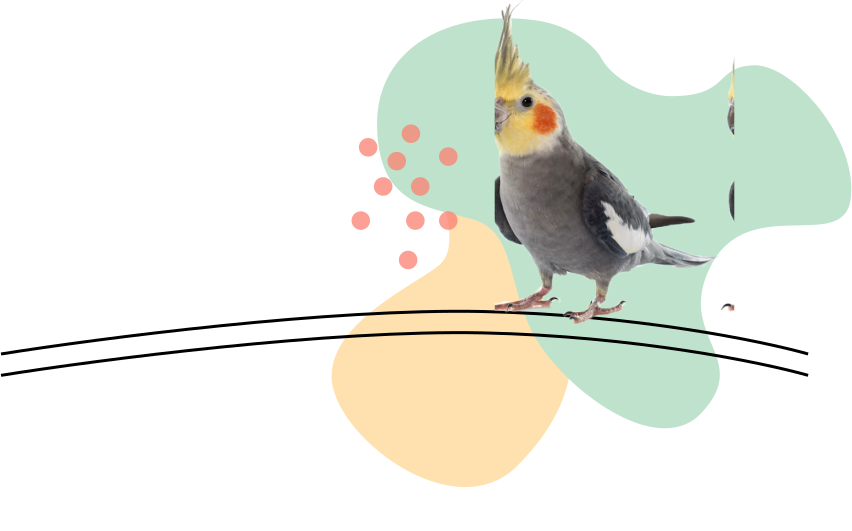
Worldwide there are currently 22 cockatiel colour mutations established in aviculture, of which eight are exclusive to Australia. Mutations in captivity have emerged in various colours, some quite different from those observed in nature. Wild cockatiels are grey with visible differences between males and females. Male grey cockatiels typically have yellow heads while the female has a grey head. Juveniles tend to look like females with pinker beaks. The pied mutation first appeared in California in 1949. This mutation is a blotch of colour on an otherwise solid-coloured bird. For example, this may appear as a grey blotch on a yellow cockatiel.
Lutino colouration was first seen in 1958. These birds lack the grey of their wild counterparts and are white to soft yellow. This is a popular colour; due to inbreeding, these cockatiels often have a small bald patch behind their crests. The cinnamon mutation, first seen in the 1950s, is very similar in appearance to the grey; however, these birds have a warmer, browner colouring. Pearling was first seen in 1967. This is seen as a feather of one colour with a different coloured edge, such as grey feathers with yellow tips. This distinctive pattern is on a bird's wings or back. The albino colour mutation is a lack of pigment. These birds are white with red eyes. Fallow cockatiels first appeared sometime in the 1970s. This mutation shows as a bird with cinnamon colouring with yellow sections. Other mutations include emerald/olive, dominant and recessive silver, and mutations exclusive to Australia: Australian fallow, faded (west coast silver), dilute/pastel silver (east coast silver), silver spangle (edged dilute), platinum, suffused (Australian olive), and pewter. Other mutations, such as face altering mutations, include whiteface, pastelface, dominant yellow cheek, sex-linked yellow cheek, gold cheek, cream face, and the Australian yellow cheek.
Cockatiel colour mutations can become even more complex as one bird can have multiple colour mutations. For example, a yellow lutino cockatiel may have pearling – white spots on its back and wings. This is a double mutation. An example of a quadruple mutation would be cinnamon cockatiel with yellowface colouring with pearling and pied markings.